29 May 2026 | Samaira Khan (Senior Partnerships Manager and Operational Lead, PEDRI)
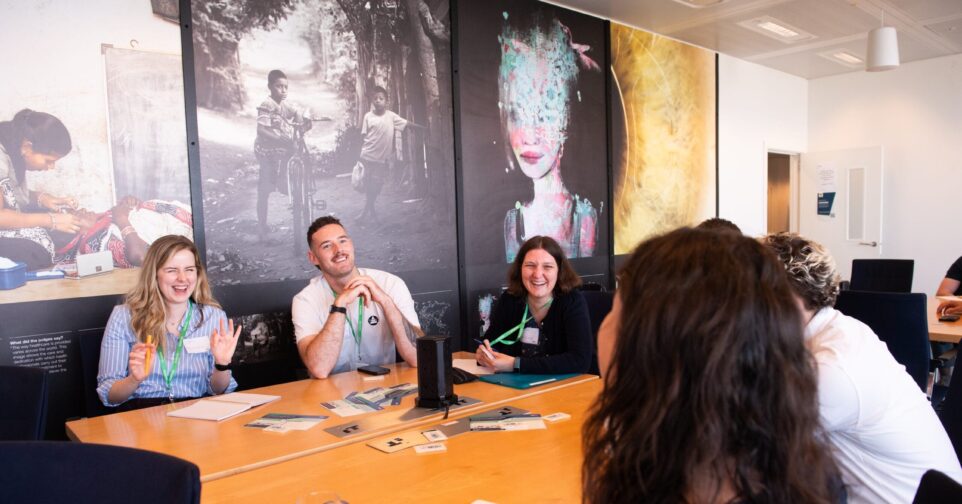
At our away day in March, hosted by our partners Research Data Scotland, we heard directly from several PEDRI partner organisations about how they are using the Good Practice Standards.
To me, what stood out the most was how consistently the Standards are being interpreted in ways that feel practical, flexible, and grounded in real-world delivery. Across organisations, there was a clear sense that these principles are not just aspirational, they are increasingly embedded in day-to-day work. Read on to find out more.
Smart Data Research UK
Smart Data Research UK highlighted how transparency and mutual benefit can strengthen trust in data research. Their public dialogue showed a clear expectation from participants: openness about how data is used, and tangible evidence of public benefit. The discussion reinforced that trust is not built through process alone, but through visible outcomes and accountability.
Research Data Scotland
Research Data Scotland shared how they are embedding equity, diversity and inclusion (EDI), data literacy, two-way communication, and mutual benefit across their work. The breadth of activity ranged from inclusive recruitment and training process for their Scotland Talks Data panel and collaborative working with partner organisations for development of activities at public engagement events. It offered a strong example of how public involvement and engagement can be built into organisational culture, rather than treated as a standalone activity.
ADR UK (Administrative Data Research UK)
ADR UK (Administrative Data Research UK) spoke about their public panel model (e.g. ADR England Public Insights Panel) and efforts to widen participation, including actively recruiting people with no prior research experience. A key takeaway was the emphasis on structured support, inductions, accessible materials, and safe spaces for discussion which enables meaningful involvement.
Cancer Research UK
Cancer Research UK shared examples from their Data-Driven Research Conference, where researchers were paired with patient representatives to present and co-chair. This helped bridge perspectives, improving communication and deepening researchers’ understanding of the lived experience behind the data. It highlighted the value of these connections in grounding research in real-world impact.
Public partner (DATAMIND)
Jan Speechley, PEDRI Public Partner, offered a public perspective on her involvement in DATAMIND’s Lived Experience Advisory Group and its role in shaping industry guidelines. It was particularly interesting to see how PEDRI’s From Standards to Impact funding is supporting translating these guidelines into accessible, public-facing information making outputs more understandable beyond specialist audiences.
DARE UK (Data and Analytics Research Environments UK)
DARE UK shared their work on Artificial Intelligence (AI) public dialogues, focusing on engaging participants who are new to sensitive data and Trusted Research Environments. What stood out was the emphasis on testing how messages land in practice not just in theory, particularly in relation to sensitive data use and governance in AI contexts.
Office for Statistics Regulation
The Office for Statistics Regulation highlighted how public involvement has improved clarity and accessibility in statistical communication. External perspectives help surface blind spots and lead to outputs that are more understandable, transparent, and accountable.
HDR UK (Health Data Research UK)
HDR UK shared how public involvement is embedded in strategic decision-making through their Public Advisory Board. Public perspectives are feeding directly into major areas such as AI, EDI strategies and community engagement rather than sitting alongside them. That level of integration felt particularly significant. They also launched a new national programme, Take the Lead, to improve under-served audiences’ engagement with health data research.
Bringing it together
Reflecting on the discussions, a few themes emerged.
Across both health and non-health settings, the Good Practice Standards are clearly shaping how organisations approach public involvement and engagement in data and statistics. Transparency and accountability emerged as the foundation for building trust whether in health data research, social research, or wider data and AI initiatives. While the contexts may differ, the expectations from the public are strikingly consistent: clarity about how data is used, and confidence that it delivers meaningful public benefit.
What came through strongly is that meaningful inclusion goes beyond simply inviting people to take part. Our partners are putting the Standards into practice by investing in accessibility through clear communication, supportive environments, and approaches that enable people from a wide range of backgrounds to contribute in a meaningful way.
Equally, the most effective approaches are those that treat public involvement as genuinely two-way. Across the examples shared, partners are not only gathering input, but using it to shape decisions, improve communication, and strengthen the relevance and impact of their work in data and statistics.
From a partnership perspective, it was particularly encouraging to see how the Good Practice Standards are being actively interpreted and applied across such a diverse landscape. In health, they are helping to connect research more closely to patient experience. In non-health contexts, they are strengthening public dialogue around data use, governance, and emerging technologies like AI. In both cases, they are supporting more transparent, inclusive, and accountable ways of working.
What made the away day especially valuable was seeing the difference this is already making in practice. The Standards are not sitting on a page. They are being used, tested, and adapted by our partners in real-world settings. It didn’t feel theoretical; it felt active, evolving, and already contributing to more trusted and impactful use of data and statistics.
If you are using our Standards, we would love to hear from you. Please do get in touch and sign up to our Pledge.
If you are looking for support in adopting the Standards in your own work, try our Good Practice Standards Toolkit and share how you’re involving the public in your work. Reach out to the team at contact@pedri.org.uk to receive your copy.