Back to news

Making it Happen: Engaging the public with complex data topics in local community settings

Elizabeth from DARE UK shares reflections on engaging the public in conversations about sensitive data and AI.
Making it Happen: Engaging the public with complex data topics in local community settings

30 June 2026 | Elizabeth Waind (Senior Engagement Manager, DARE UK)

In our second Making it Happen blog, Elizabeth from PEDRI partner DARE UK shares practical reflections on engaging members of a local community in England in conversations about sensitive data and artificial intelligence (AI).

Background

In late 2025, DARE UK (Data and Analytics Research Environments UK) carried out a pilot public dialogue to explore how to have effective discussions with the public about the training of AI models on sensitive data in Trusted Research Environments (TREs). We specifically wanted to engage people without existing knowledge and understanding of data research and AI.

Through a series of three four-hour, in-person workshops, we aimed to develop participants’ knowledge and understanding of the subject matter over time. We explored their initial views, and got their feedback on the recruitment and workshop process.

Our approach to community engagement  

For this pilot project, we chose to focus on a single location in England. We settled on Birmingham as a diverse urban area and used the Birmingham City Council ward fact sheets to narrow our location to a smaller community within the city. The ward (local electoral district) fact sheets provide key demographic and labour market data from the Census (currently 2021). Many major cities across the UK maintain similar ward or council fact sheets, which are a useful way of understanding the make-up of different urban localities.

It was important to us to find an inner-city area of ethnic and socio-economic diversity to ensure we were engaging a variety of different voices.

We chose to engage in Balsall Heath, which is south of Birmingham’s centre and has relative diversity compared to the city as a whole. This includes a higher proportion of residents from minority ethnic backgrounds, including Pakistani, Black African and Black Caribbean communities; a higher proportion of young people; and a diverse spread of qualification levels and occupations. Balsall Heath also has vibrant community activity, with spaces such as the B12 Urban Village Hall based within the heart of the community, where we held the workshops.
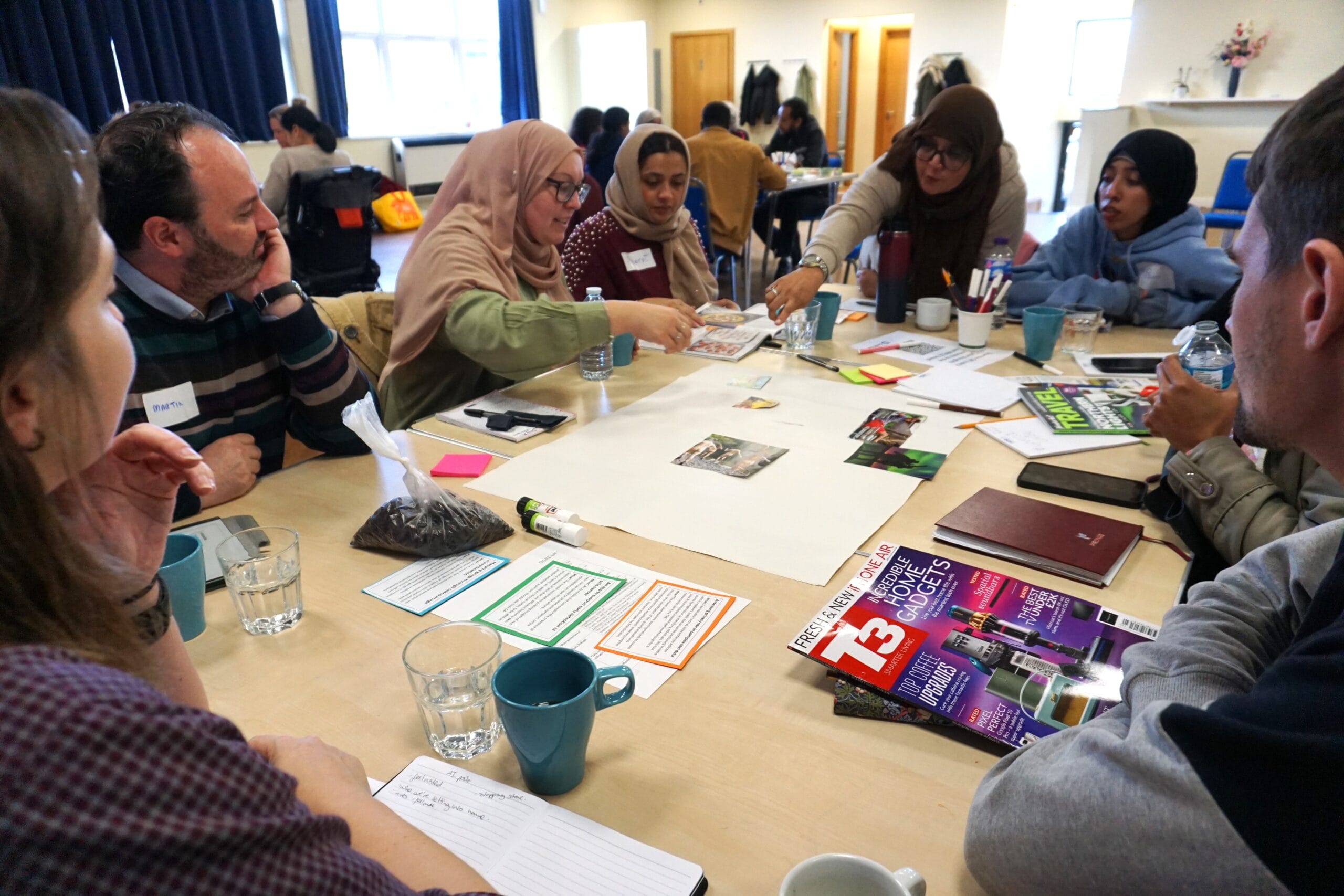
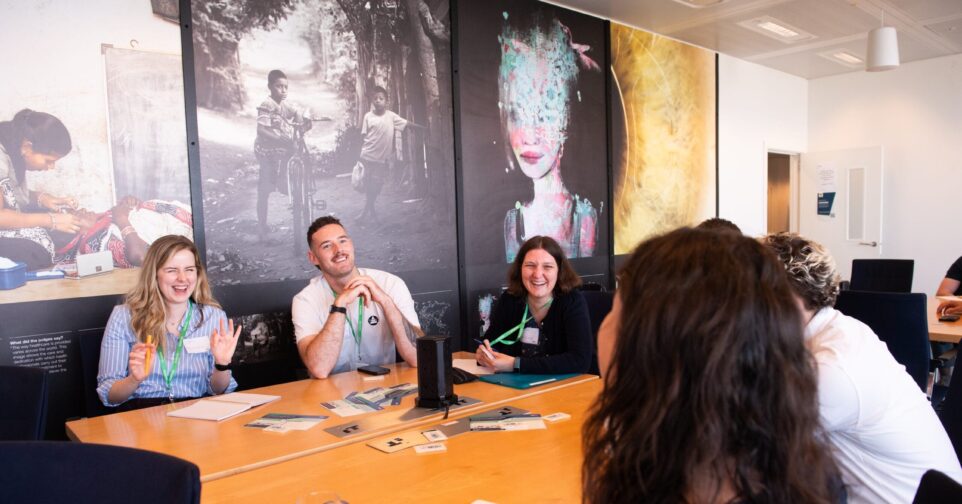
Group sat at table talking to one another

Participant recruitment

We worked with Birmingham Voluntary Service Council (BVSC) to recruit our participants. BVSC works directly in partnership with the voluntary, community, public and private sectors to deliver social change across the city through volunteering and social action.

BVSC’s local community researchers carried out ‘on-the-ground’ recruitment in Balsall Heath. Members of a variety of different community groups – including groups related to, faith, gender and age, for example – were approached to find out if they were interested in getting involved. As trusted members of the community, the researchers knew where and how to reach people best, both in-person and online. This meant we could recruit a diverse group of participants through existing networks, rather than starting from scratch.
What worked well and what we would change

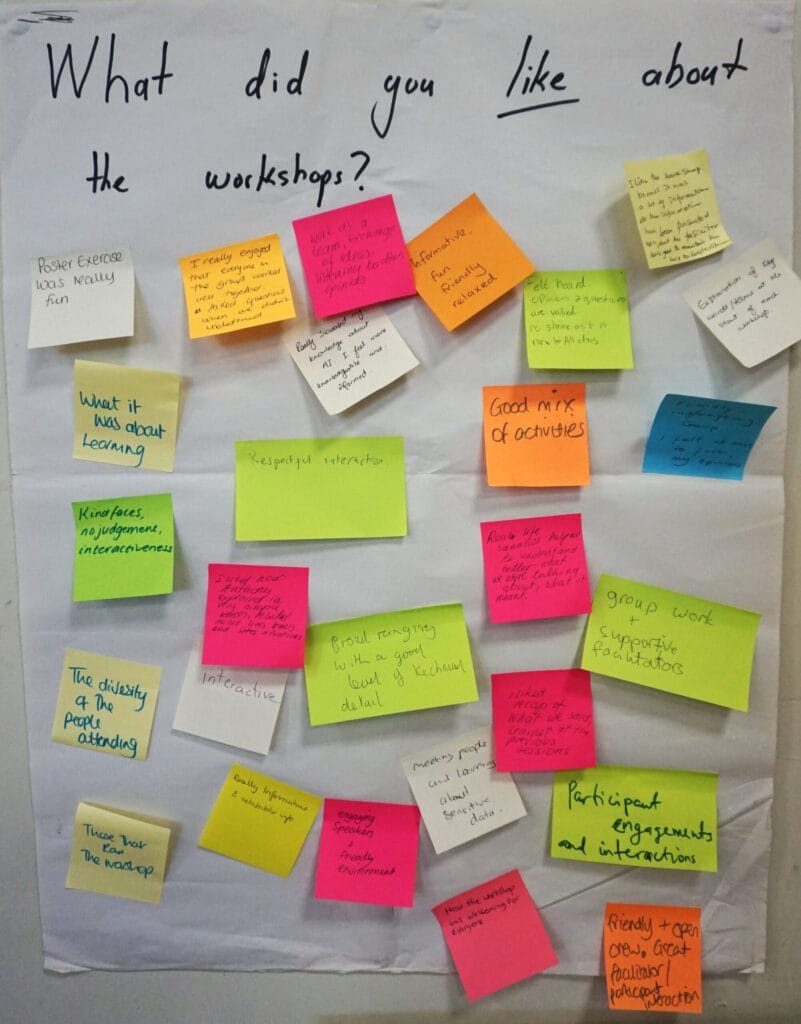
Holding our workshops in a local community setting had a huge impact on participants’ comfort and confidence in contributing to discussions. In total, 22 participants attended the workshops, with a 100% return rate across the three events. Participants expressed how much they enjoyed coming back to the village hall every week to learn more about sensitive data and AI in a familiar setting. Some said they found the workshops to be friendlier and less serious than expected, whilst others said, had the workshops taken place in a more formal venue in the city centre, they would likely not have taken part.

Participants’ knowledge and understanding of sensitive data research and AI, and their confidence contributing, grew over the course of the workshops. However, there were some challenges maintaining the scope of discussions on sensitive data held in TREs, with conversations frequently veering towards internet-based AI like ChatGPT and Alexa.

Board filled with post-it notes in response to "what did you like about the workshops?"

It’s perhaps no surprise that participants would want to talk about the data and AI they are most familiar with from their everyday lives, particularly with the amount of public and media discourse on the topic when the workshops took place. But if there’s one thing we’d change, it would be to get pre-conceived ideas about data and AI out of the way early on, and more clearly and continuously emphasise the scope of discussions from the outset. There’s also work to be done to produce more plain English materials about AI in TREs to help support future conversations and reduce some of the barriers to the technical detail.

In summary, our key learnings were to:

  • Create a familiar and friendly atmosphere by meeting communities in their own spaces
  • Get pre-conceived ideas about the subject matter out of the way early
  • Take time developing plain English materials to support conversations without the jargon

What’s next?

We’ll be taking forward the findings and lessons learned from the pilot to explore public attitudes towards sensitive data and AI in more depth and on a UK-wide scale.

Following the success of our community-based approach for the pilot, we’re planning to do the same for our wider work, with a focus on at least one local community in each of the four UK nations. Tapping into existing community networks, like we did through BVSC in Balsall Heath, will be really important for helping us reach people from a diversity of different backgrounds.

Half of our participants have chosen to remain involved in DARE UK’s work, highlighting their ongoing interest in learning more about the topic and contributing further. As members of our new AI Public Panel, their input will be valuable in helping to shape our next phase of this work. Find out more

The detailed findings and recommendations from the pilot are now available. If you want to keep updated about DARE UK’s ongoing public attitudes work, please sign up to our newsletter.

Contact: Elizabeth Waind at enquiries@dareuk.org.uk.

Making it Happen is our new blog series highlighting the practicalities of delivering public involvement and engagement projects, programmes and activities in data research and statistics from the people doing it. Do you have something you’d like to share as part of the series? Get in touch at contact@pedri.org.uk.

Stay connected: Sign up to our newsletter

Sign up
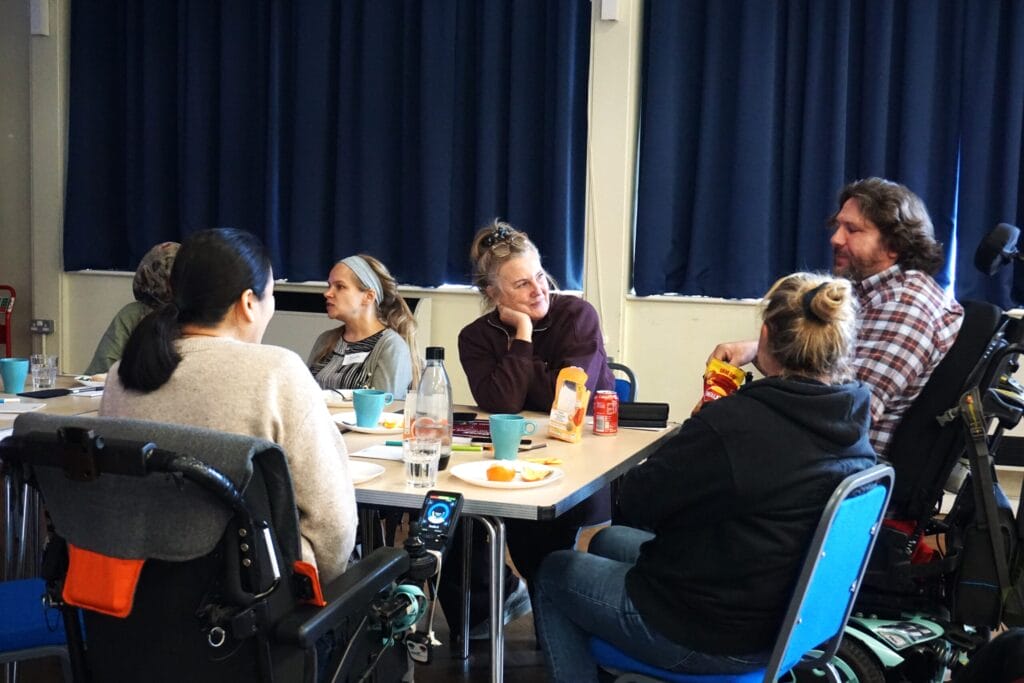
A group of people talking.
Get in touch

We’re here to help.

Complete our contact form and we’ll be in touch.

Terms(Required)