25 August 2026 | Shalom Vic-Jumbo (Public Engagement and Communications Intern, Health Data Research UK)
When you hear “data research”, what comes to mind?
I’m Shalom Vic, a Public Engagement and Communications intern at Health Data Research UK (HDR UK) through their Black Internship Programme.
When I first thought about data research, I pictured numbers, spreadsheets, research papers and probably someone coding somewhere in the background. But after spending the last few months as an intern, I’ve realised you don’t have to be a data scientist to have a place in the conversation.
I wondered: Had other interns had a similar realisation?
So, I sat down with fellow HDR UK interns, Basil Udeh and Stephanie Verissimo, to chat about what our internships have been like. While we’ve all been working on projects to improve public understanding and trust in data research, we all have different perspectives and learnings from our internships. Read on to find out more.
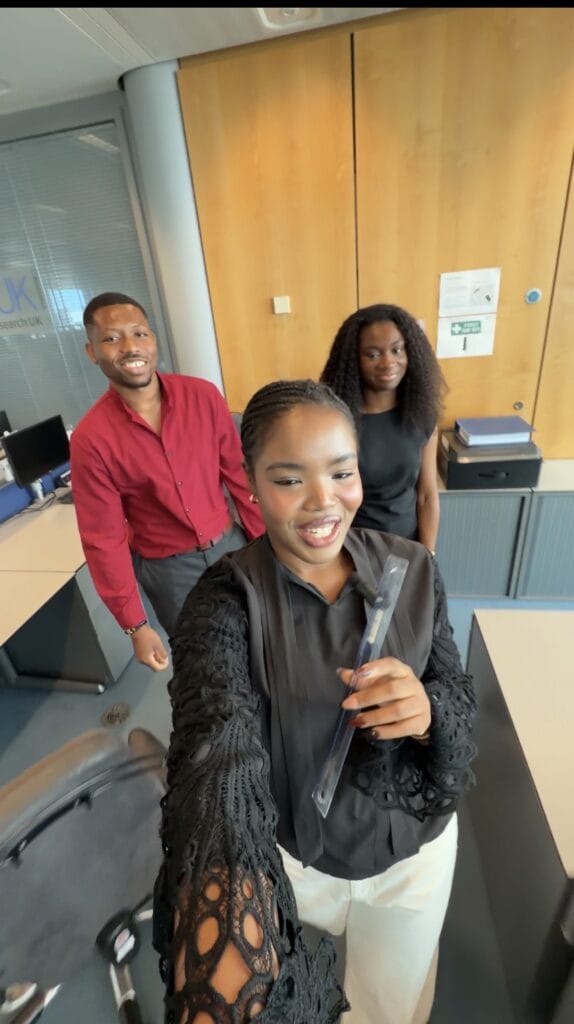
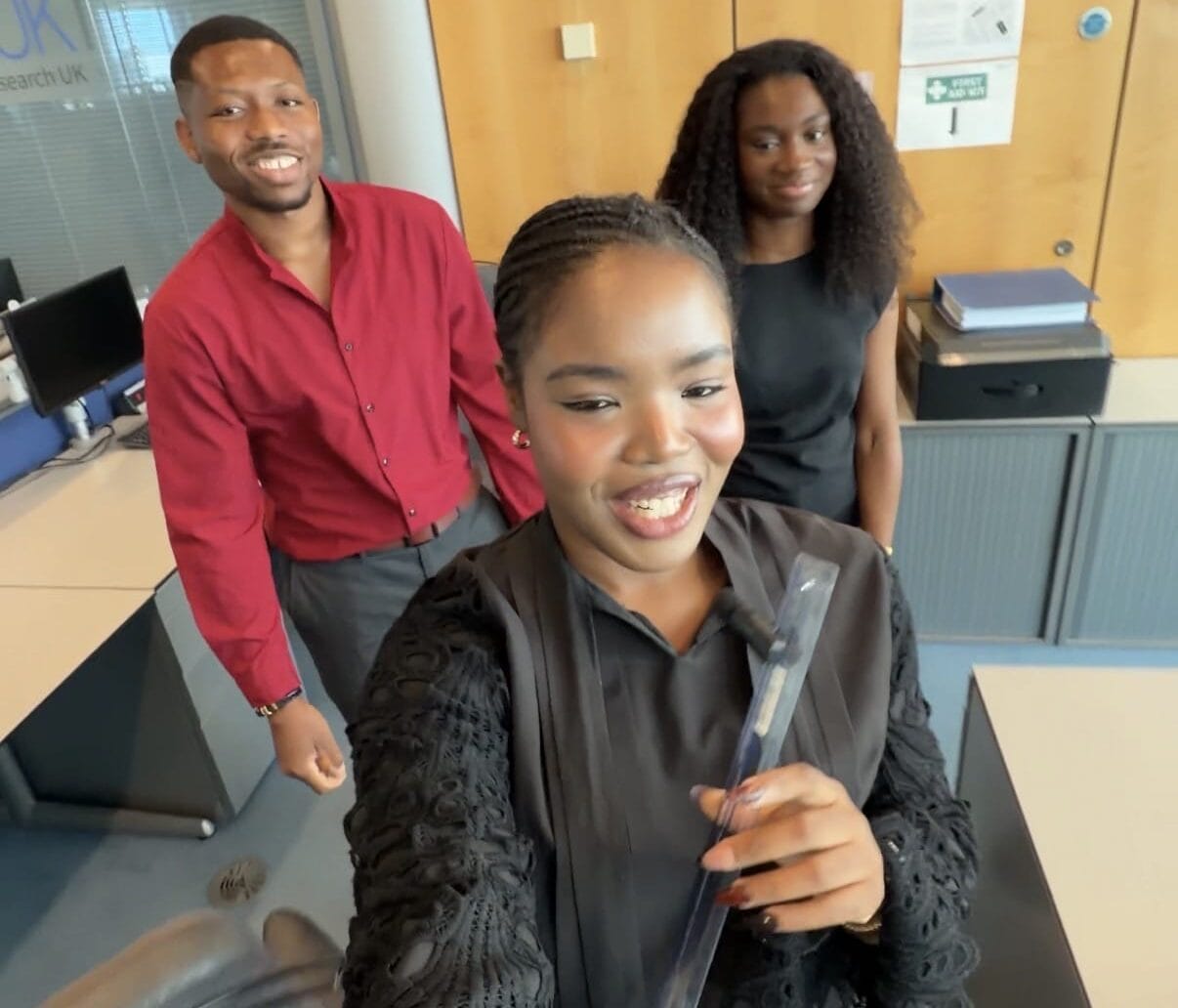
Caption: Basil (left), me (centre) and Stephanie (right) in the HDR UK head office.
So… how has it been so far?
I started by asking Stephanie what had surprised, challenged or helped her grow during the internship.
Coming from a pharmacy background, she saw the internship as a chance to explore a side of healthcare – data science – that was relatively new to her.
“This internship has been a wonderful introduction to data science for me.”
One of the biggest challenges for Stephanie was getting used to the terminology. As data research was new to her, there were plenty of moments when she came across phrases and ideas she hadn’t encountered before. But rather than letting that stop her, she kept reading, researching and learning until things started to click. I think most of us can relate to that feeling of reading something and thinking, “Wait… what does that actually mean?”
Basil’s experience has been slightly different. One of his biggest surprises has been the care taken to build trust in the data research process.
“One thing that has surprised me is how much thought goes into making sure that research is meaningful, ethical and inclusive, particularly when it involves members of the public.”
Through his work with the Public Engagement in Data Research Initiative (PEDRI), Basil has engaged with researchers, policymakers and community organisations, which has also helped him become more confident communicating with different audiences.
For me, the internship has been amazing, but challenging. I already knew I enjoyed writing, editing and designing, but I didn’t expect to see just how much thought goes into using those skills within data research.
A social media post, blog or engagement activity might look simple when you see the final product, but there is usually a lot happening behind the scenes. Who are we trying to reach? Will they understand this? Does it mean something to them? Those are questions I find myself thinking about much more now.
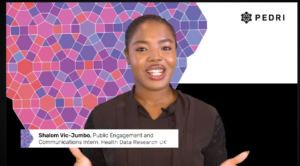
Caption: Myself and the other interns had the opportunity to record instructional videos for PEDRI’s new public involvement and engagement in data research and statistics learning modules which will be launched later this year.
Our favourite projects: It’s all about the people
So naturally, I was curious about everyone’s stand-out projects…
Stephanie has been creating explainer videos to help the public understand how Artificial Intelligence (AI) is used in health data research.
Attending the HDR UK Public Advisory Board (PAB) celebration also changed how she thought about public engagement. She came to see that meaningful engagement goes beyond simply informing the public; it is about making people an active part of the process and valuing their lived experiences.
“I have adopted this approach and involved the public with my own project by asking PAB for feedback before it goes out to the wider public.”
Basil’s favourite project has focused on the ethics of public involvement in data research and statistics. What he enjoyed most was thinking about what meaningful public involvement and engagement looks like. For him, it isn’t simply about explaining research to people…
“It’s about creating opportunities for people to share their experiences, perspectives and priorities and have these genuinely considered in research.”
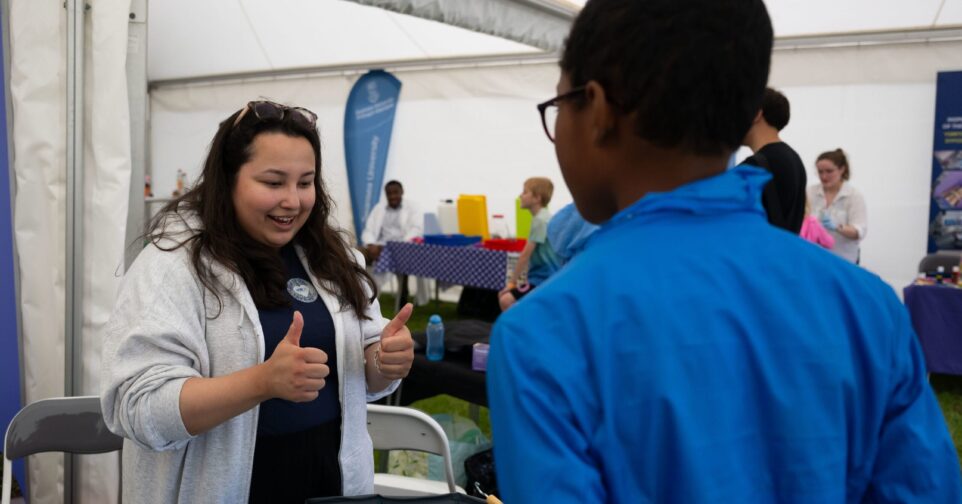
And then there’s the fun side of public engagement too. Basil mentioned joining fellow interns to demonstrate how communities can explore data in their everyday lives, as part of the HDR UK Take the Lead programme, something I was also involved in.
Take the Lead has probably been my favourite project too, partly because of its mission; to empower community groups to take on activities that support their health and wellbeing, but also because it gave me the opportunity to take on more responsibility, particularly around developing an Activity Pack with resources to inspire community groups and organisations to lead their own data engagement activities (available soon!). It has been really rewarding seeing an idea move from something we were discussing into something people can actually use.

Caption: Basil and I at the HDR UK away day right at the beginning of our internships.
So, do you actually need to be good at numbers to work with data?
This was probably my favourite question because I think all three of us had something to say about it.
Stephanie pointed out that there are roles such as information governance, where the focus isn’t on analysing numbers but on making sure data is handled appropriately, ethically and legally so it can be used in a trustworthy way in research.
Basil had a similar realisation. Before the internship, he mainly associated data research with “numbers, statistics and coding”. Now, he sees opportunities in ethics, data governance, policy, communication, project management, user experience (UX) and public involvement and engagement. And importantly, he realised that technical skills aren’t the only skills that matter.
“Health data is about people, so involving people in how that data is collected, used and understood is just as important as analysing it.”
I completely agree.
I knew there were non-technical roles before starting my internship, but they sometimes felt a little out of reach. Discovering roles in public engagement, communications and other areas has made the data research space feel much more accessible.
What we’re taking away
After talking through our experiences, one thing became clear: There isn’t one way to work with data research.
You might be interested in coding and statistics. Or you might be more interested in ethics, communication, design, governance, policy, project management or working directly with communities. And maybe that’s the most exciting thing we’ve discovered during our internships.
Behind every data research project is a person, a community or a lived experience. Understanding the numbers matter, but so does understanding the people behind them. So, if you’re interested in data research, but don’t see yourself as a “numbers person”, maybe there is still a place for you here.
Interested in hosting a data science intern in summer 2027? The Black Internship Programme are looking for hosts.