3 November 2026 | R. Frances (DATAMIND Lived Experience Advisory Group member)
A bit about me
I’ve been a member of DATAMIND’s Lived Experience Advisory Group (LEAG) for almost a year now. Having joined at the end of 2025, I got involved because I felt ready to learn by sharing experiences and developing an understanding of systems built for individuals in need of support. The aim was and continues to be, to help to improve them, for myself and for others.
One of the first projects I got involved with was funded by PEDRI’s From Standards to Impact award. In this project, we co-created a public-friendly animation about how routinely collected mental health data is used for research, including by commercial companies.
Being involved in this project led to attending and presenting at the recent PEDRI Forum.
Why I took the opportunity
Since joining the LEAG, our Patient and Public Involvement (PPI) coordinator had shared several opportunities to present at events. At first, I didn’t think it was achievable for me, but when an opportunity came up to present in a smaller, online setting, I jumped at the chance to use it as an opportunity for personal growth. It went well, so when the chance to present at the PEDRI Forum came up, it felt like a natural progression.
I was excited to be around like-minded people, build my skills and have new experiences. I was also curious to learn more about what is happening in the world of research with public engagement and involvement, to help build up a bigger picture of how far our contributions in the DATAMIND LEAG could go.
I was looking forward to working as a team and creating a sense of solidarity with my co-presenters, Naomi Clements-Brod (PPI Coordinator) and Jan Speechley (LEAG member).
What it was like to attend the Forum
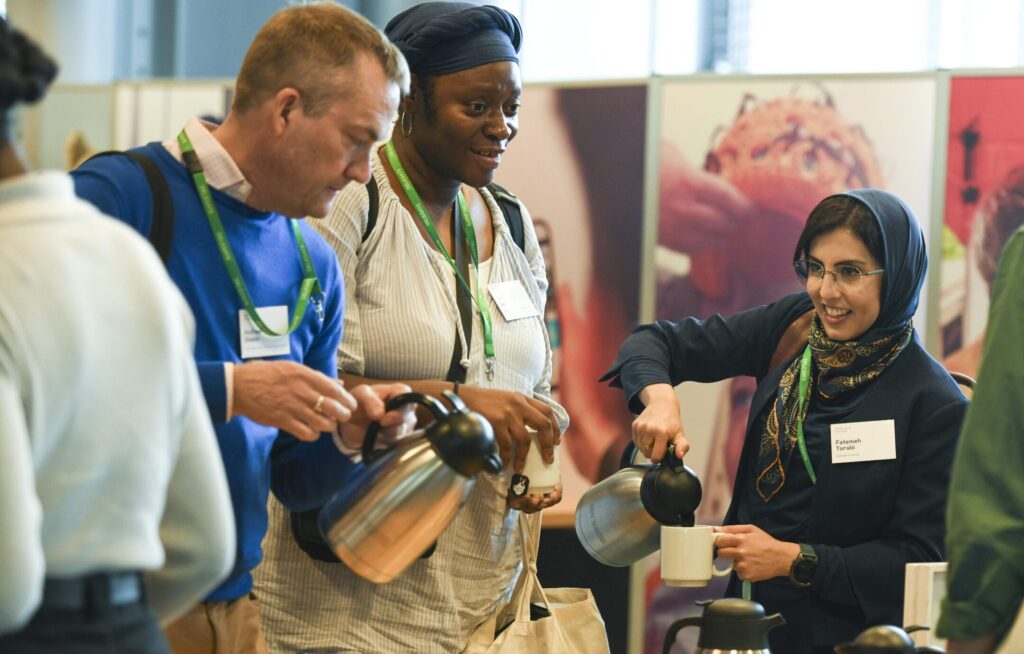
Advance information was very clear, and I was able to make a plan for myself; selecting which talks I wanted to attend and how I would manage my energy throughout the day (e.g. when to use the quiet room).
However, being at an in-person event is an experience that you cannot always plan for and on this occasion, I found the sensory experience challenging. Whether it was clinking glasses as drinks were prepared behind the keynote talks, loud noises in the designated quiet room, or a photographer taking pictures in every session, the strain of this sensory stimulation made it difficult to concentrate. I worried attendees might judge me for having to get up and move around during some of the talks. These experiences showed that accessibility depends not only on providing designated spaces, but also on ensuring that they are respected and managed in a way that serves their intended purpose.
This coupled with the concern I would use up all my energy by the time of our presentation in the late morning caused considerable anxiety, but getting to the room where our session would take place alleviated this.
A soundproofed room and a feeling of comfort with the audience, helped boost my confidence. One of the first presenters in our rapid-fire presentation session was another person with lived experience which also helped put me at ease. Seeing them so positively received by the audience conjured an image of myself at the front of the room, realising I could do the same.
Presenting nerves didn’t hit me until right before I was introduced and about to leave my seat. I tried to let the feeling dissipate as I stood, reminding myself that I know this presentation, we’ve been over it and I’m standing alongside people I trust. I’m delivering information, that is it!
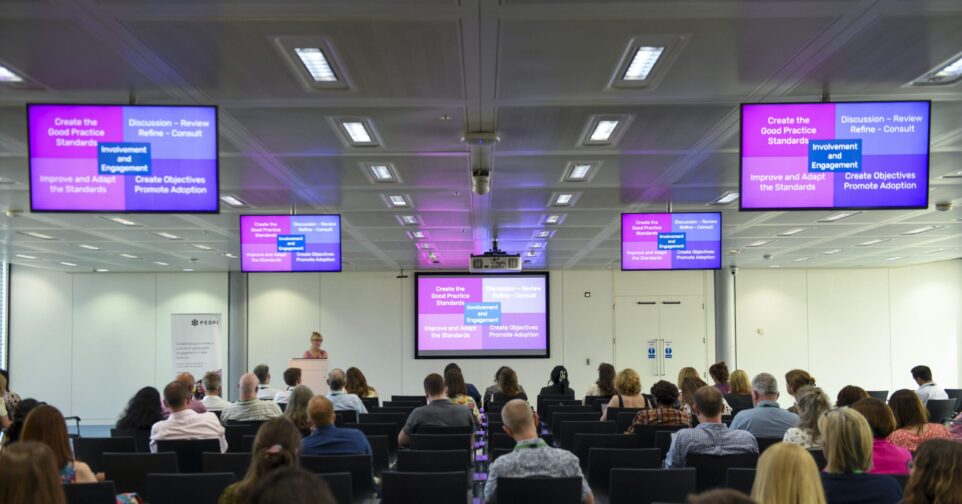
The presentation itself went well. It was useful having an extra screen so I could see our slides without having to turn around constantly.
Afterwards, I reflected on the emotions that came up for me during the presentation and they were positive: I was curious about the audience which allowed me to feel free.
My favourite session
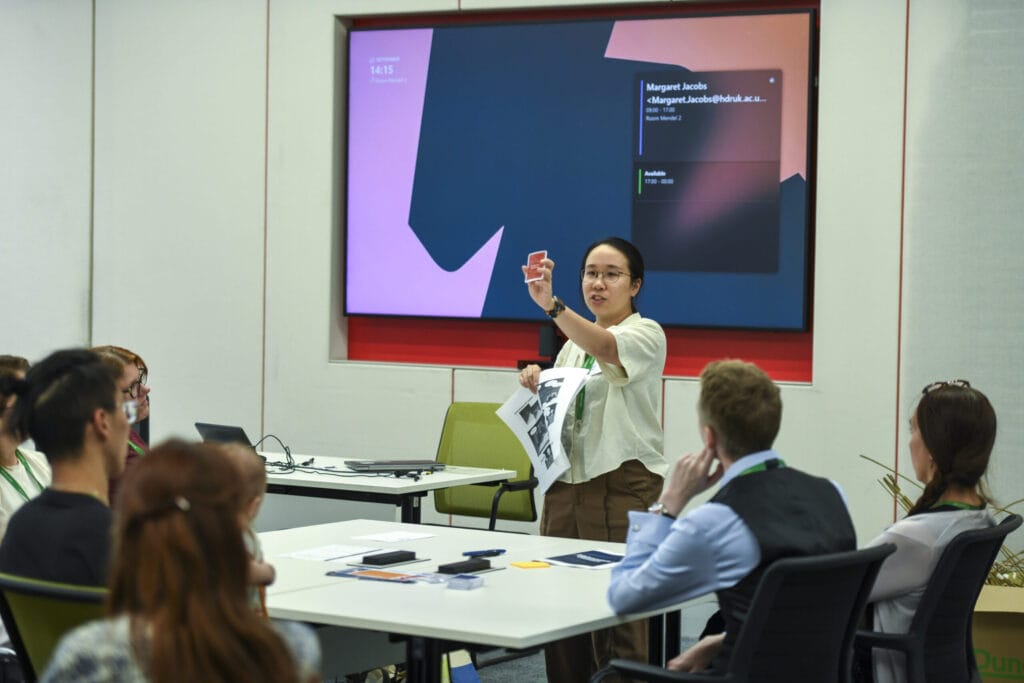
In the afternoon, I enjoyed taking part in a different type of activity, a boardgame called The Linkmaster’s Dilemma which explores issues like data linkage and trust. It took place in one of the smaller rooms, and it was comforting to be in a quieter environment. I noticed that many attendees had colleagues to sit with, so I was pleasantly surprised that our PPI coordinator also attended the session. This resulted in us sitting together.
It wasn’t a simple game, but it started to make sense as the session went on. The session leader said that the game was designed for young people who might not understand what it means to share their data, but as an adult who has been involved with DATAMIND for nearly a year, I’m still trying to understand this too! I thought a game could be a good way of supporting members of lived experience advisory groups’ understanding of data sharing and linkage.
The impact on me
I now know more about my own needs when attending an in-person conference and what support to ask for next time. For example, while it was useful to have the floor plans and schedule in advance, being physically in the space beforehand would’ve really helped me – this isn’t something I fully realised before. Additionally, next time I might make an access statement for myself– so that I and others know what I need. I’m learning more about my own needs in certain settings as I’ve received various life altering diagnoses relatively recently.
I’m currently involved in helping to plan a lived experience conference that will take place in-person next year. I’ve made many useful notes from my experience at the PEDRI Forum which will influence the recommendations I make to the organisers of the other conference.
Overall, while it was challenging to attend the Forum and give a presentation, I feel I can bank this experience as evidence. Next time I believe I can’t do something like this – I now know I can actually do it, I have proof!